I
The Sundering of Prince Thunderaan
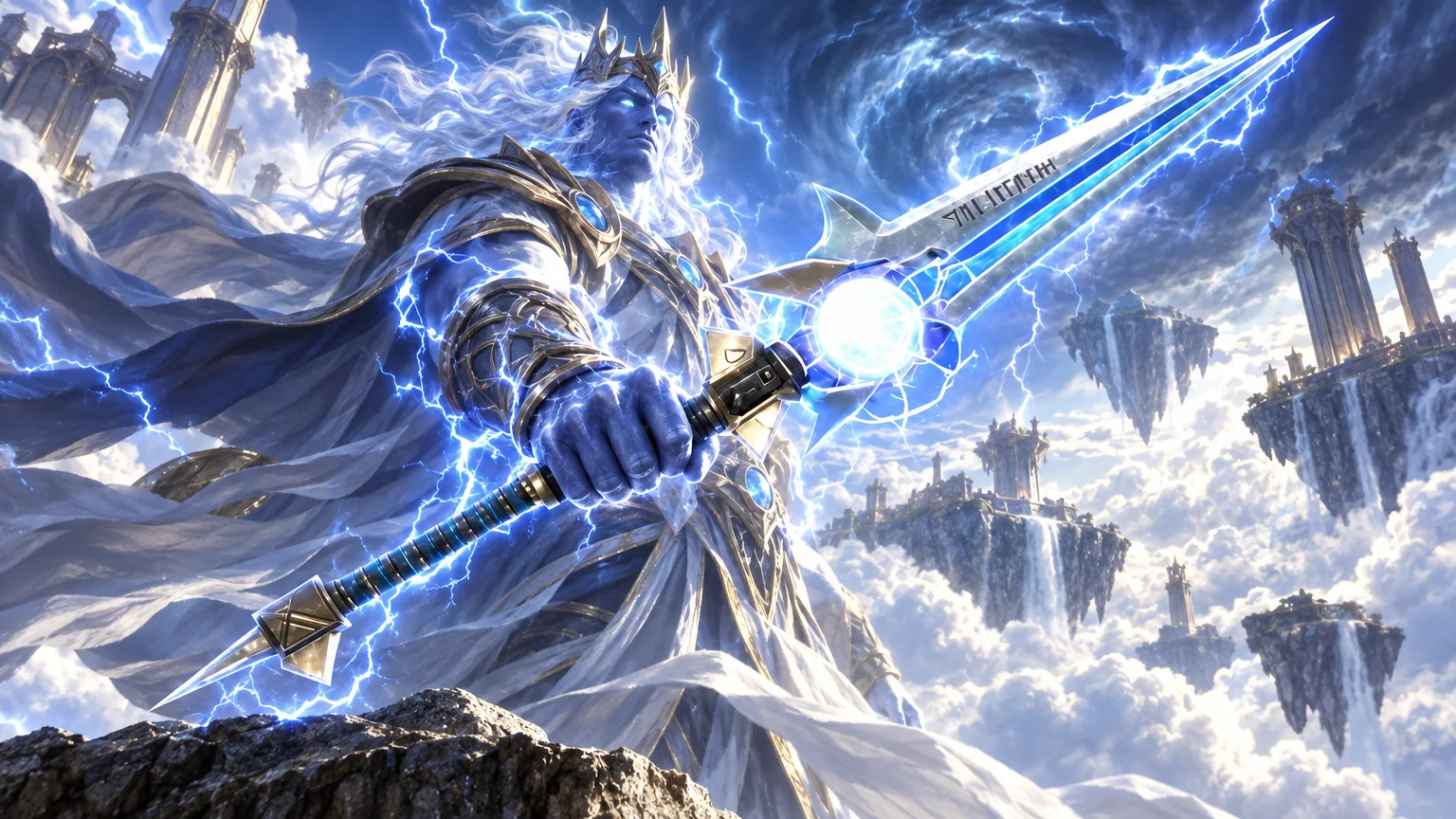
The conflict came during the ancient struggle remembered as the Elemental Sundering. Thunderaan was not a mortal king. He was the Prince of Air, son of Al'Akir the Windlord, and his essence carried the force of the storm. That made him a rival worth destroying—and a source of power worth taking.
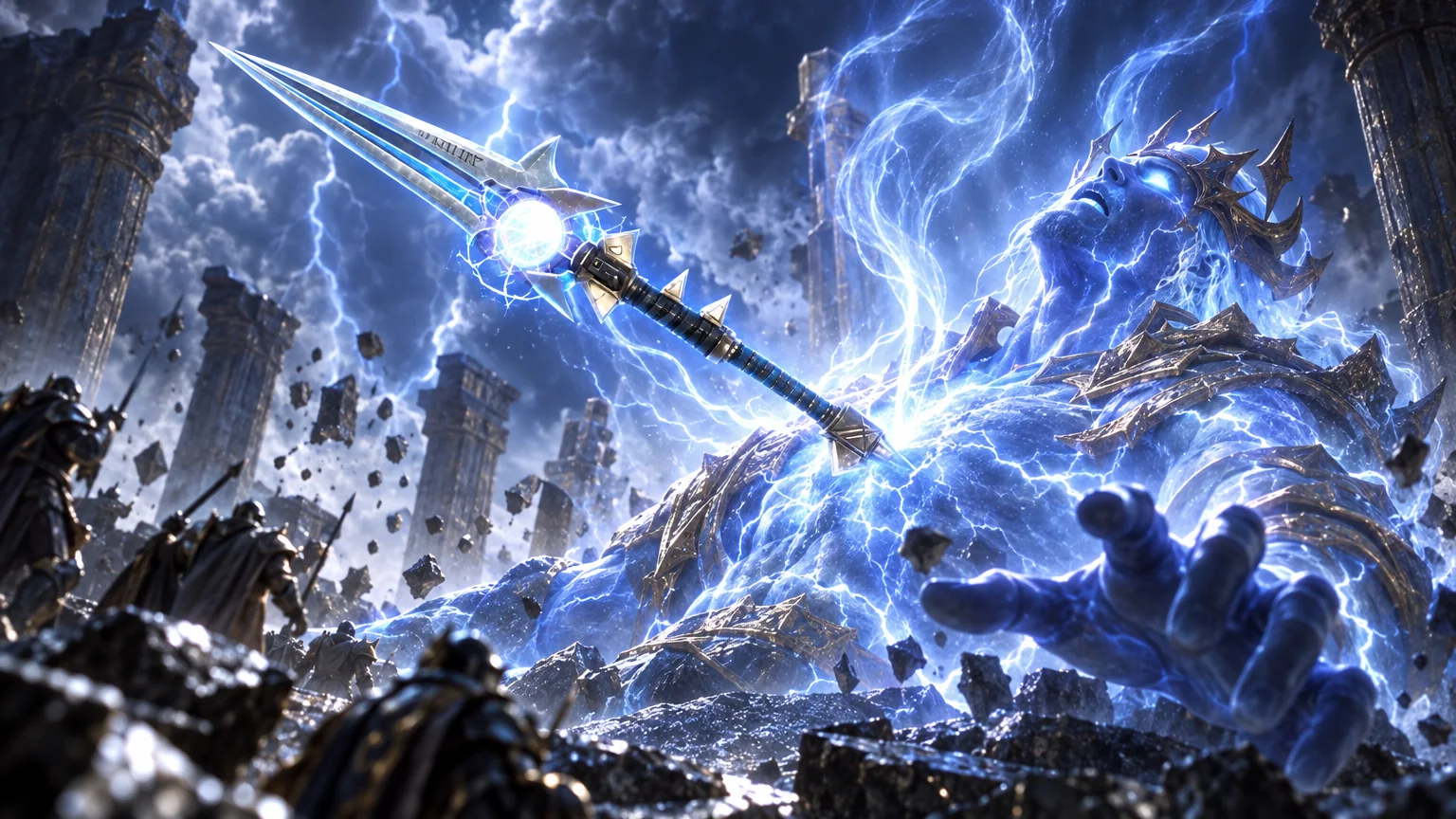
Ragnaros did not meet him alone. The Firelord struck with two of his lieutenants, Garr and Baron Geddon, and caught Thunderaan unprepared. The ambush ended beneath Sulfuras. Yet victory did not give Ragnaros everything he wanted. He consumed much of the prince's power, but he could not absorb it completely.
The surviving essence had to be contained. Ragnaros sealed it inside a talisman of elemental binding, broke the prison into two halves, and placed one with each of the lieutenants who had helped him win. Garr kept the right binding. Baron Geddon kept the left. In the ages that followed, both stood within the Firelord's domain, guarded by the very powers that had betrayed the Windseeker.
Thunderfury therefore began as something stranger than a forged relic. Before it had an edge, a hilt, or a name, it was an unfinished act of conquest: the portion of a living elemental prince that Ragnaros could neither devour nor allow to go free.
II
The Two Bindings of the Windseeker
Millennia later, the prison resurfaced in Molten Core. Mortal champions fighting through the Firelord's stronghold could take one half from Garr and the other from Baron Geddon. Either fragment was enough to draw them toward Highlord Demitrian, a servant of Thunderaan waiting among the ruined Twilight camps of Silithus.
Demitrian greeted a recovered binding as the key to his master's release. But possession was only the beginning. The vessel had to be made strong enough to contain what remained of the prince and powerful enough to break Ragnaros's hold.
The work reached across Azeroth's first great raid war. Both halves were required. So were ten bars of enchanted elementium, a metal tied to the deep elemental places of the world and obtained through the campaign against Blackwing Lair. Last came the Essence of the Firelord, taken from Ragnaros himself. The design was almost judicial in its symmetry: the prison divided between the Firelord's lieutenants would be reforged with the essence of their master.
For the champions who pursued it, Thunderfury was never simply a rare drop. It demanded victories in separate strongholds, scarce materials, skilled alchemy and smithing, and the patience of an entire raiding community. The blade's fame grew from that ordeal as much as from its lightning. Long before it could be equipped, it had already become a shared undertaking.
The Chronicle of Thunderfury
One storm. Six turning points.
- Thunderaan ambushed Elemental Sundering
- Essence divided Two bindings
- Prince summoned Silithus
- Blade awakened Mortal hands
- Weapon restored Heart of Skywall
- Windlord reborn Legion
III
The Blade Awakened in Silithus
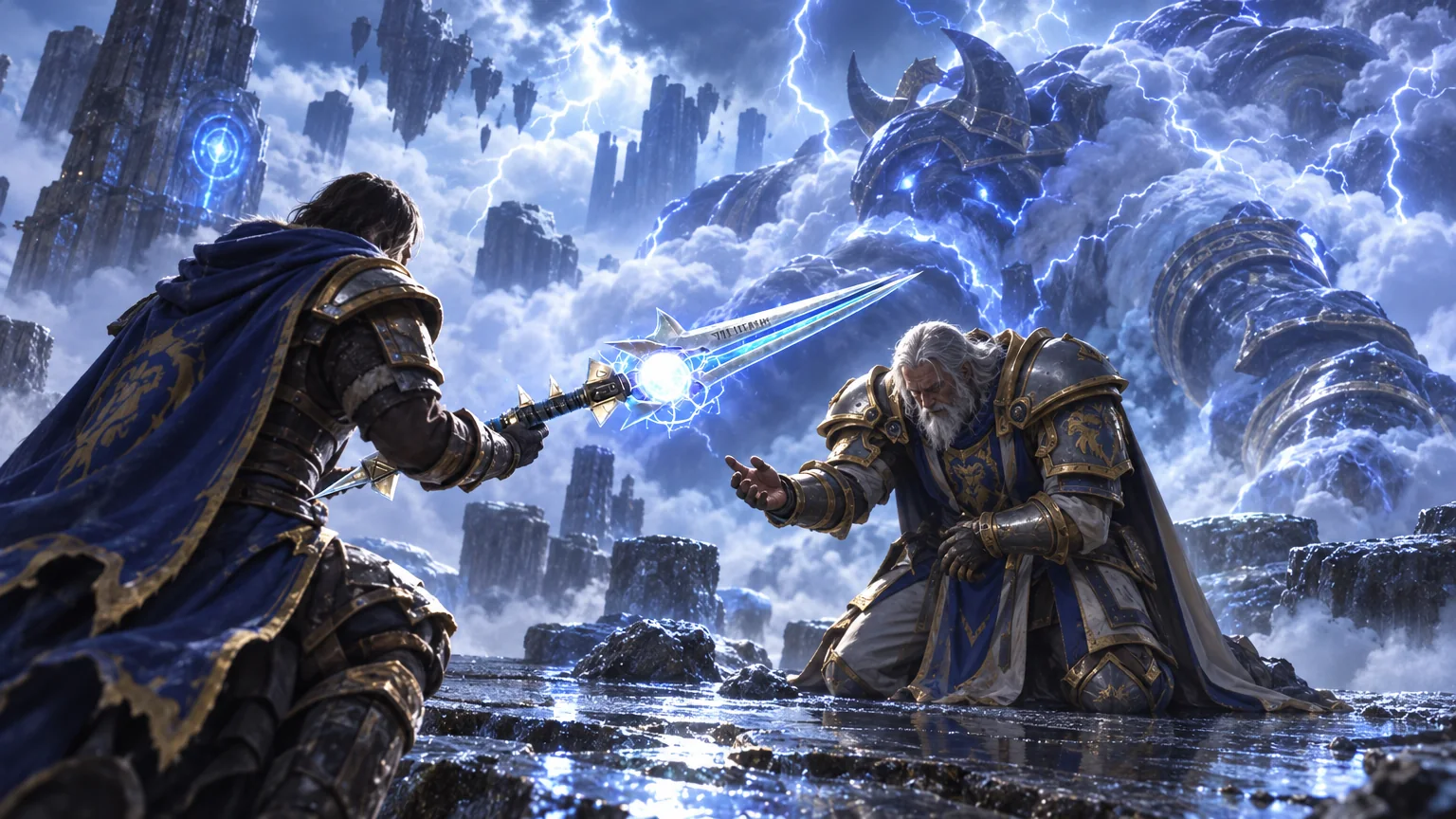
When the bindings, the elementium, and the Firelord's essence were finally brought together, Demitrian performed the summoning in Silithus. His promise had been liberation. What arrived was Prince Thunderaan himself, immense and furious, called back into the physical world before a company of armed mortals.
The rescue became another attack.
The champions defeated the Windseeker and took the Dormant Wind Kissed Blade from him. The weapon still required Demitrian's hand, but the servant who had spoken with such certainty now cowered before the people who had slain his master. Compelled to finish the work, he awakened the blade and surrendered Thunderfury, Blessed Blade of the Windseeker.
Its name sounds like an honour. Its origin is not. Thunderfury carried the remnant of Thunderaan's power inside a weapon claimed by those who had just struck him down. In battle, lightning leapt from the blade into clustered enemies, while the primary victim was caught in a cyclone that slowed its attacks. The mechanics echoed the lore with unusual clarity: this was not a sword decorated with a storm. The storm was still inside it.
That contradiction made Thunderfury one of the defining relics of the original age of World of Warcraft. The quest asked heroes to oppose Ragnaros, reassemble a prison, summon its captive, and then take the captive's power for themselves. It was a legendary reward built from an uncomfortable truth: the liberators completed the Firelord's violence in a different form.
IV
Wray's Last Keeping
Warcraft eventually gave one of those mortal wielders a name. Wray was a dwarf warrior, a tribute to the player associated with the earliest known Thunderfury. Within the story, he was the champion who carried the Windseeker's blade after Thunderaan's defeat.
Years passed. Then the Burning Legion returned, and Wray went to the Broken Isles. His trail ended in the Fiendish Vault of Azsuna, where the fel beast Ragemaw killed him. When another hero found the place, the dwarf lay at the demon's feet with Thunderfury beside him. The legendary blade that had demanded the defeat of elemental lords and raid fortresses had outlived its keeper, but not without damage.
The scene is small compared with the battles that created the weapon. There is no royal funeral and no great speech—only a fallen adventurer, a beast in a vault, and a famous sword left on the ground. That restraint gives Wray's end its weight. Thunderfury had become a symbol recognised across Azeroth, yet its wielder died as countless adventurers do: far from home, in a war larger than himself.
His death also closed the mortal chapter of the blade. The next hands to lift Thunderfury were not seeking prestige or a weapon. The Earthen Ring needed what remained inside it.
V
The Heart of Skywall
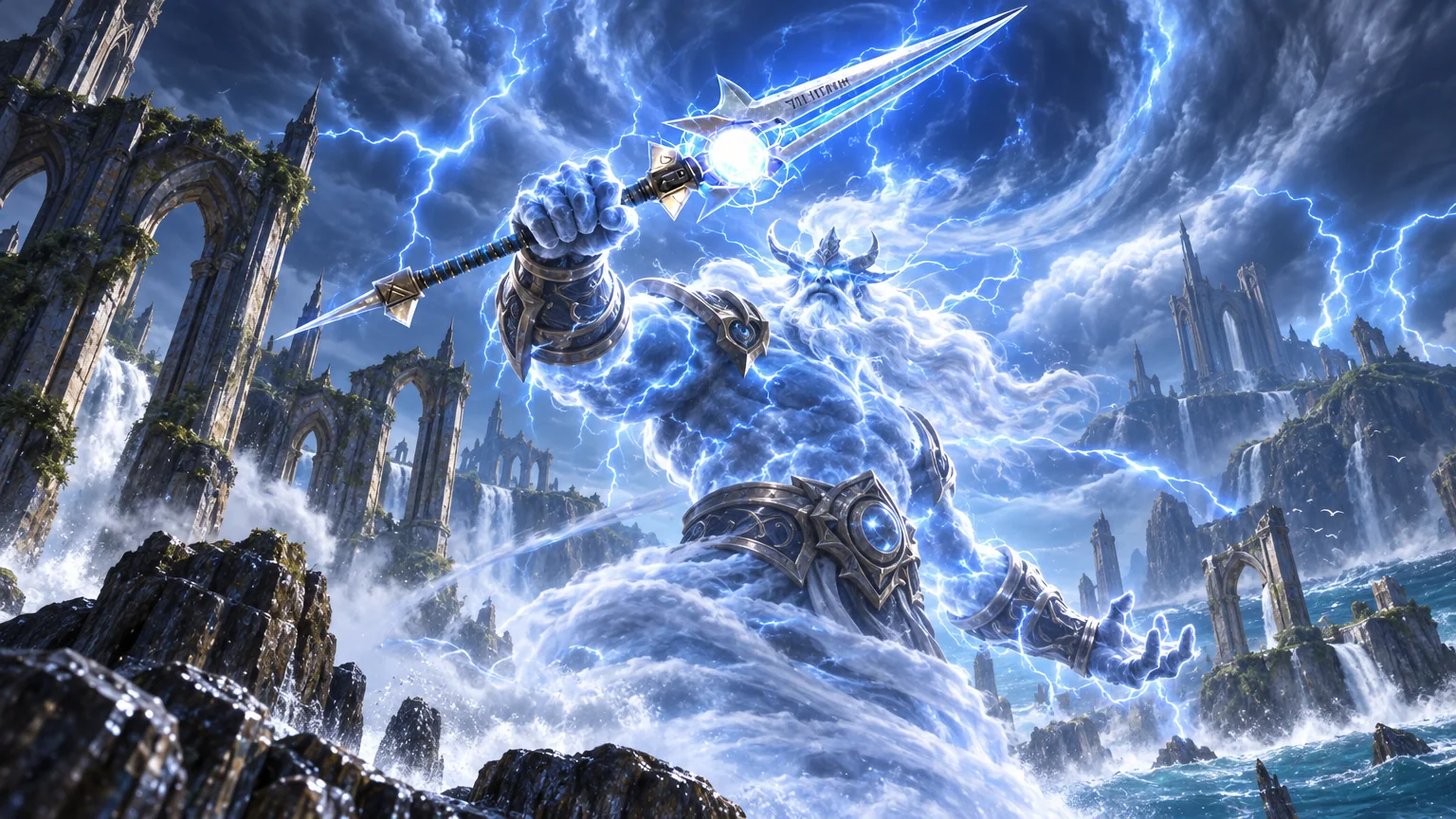
Al'Akir had fallen during the Cataclysm, leaving the elemental plane of air without its Windlord. When the Legion invaded Azeroth again, the Earthen Ring sought allies among all four elemental powers. Skywall needed a ruler, and Thunderaan—its lost prince—could fill the empty throne.
A shaman of the Earthen Ring followed Demitrian's knowledge to Azsuna, recovered the damaged Thunderfury from Wray's resting place, and carried it to the Vortex Pinnacle. The blade still held what was left of Thunderaan's soul, but time and battle had diminished it. Restoring the sword required the Heart of Skywall, held by Vortos, Duke of the East Winds.
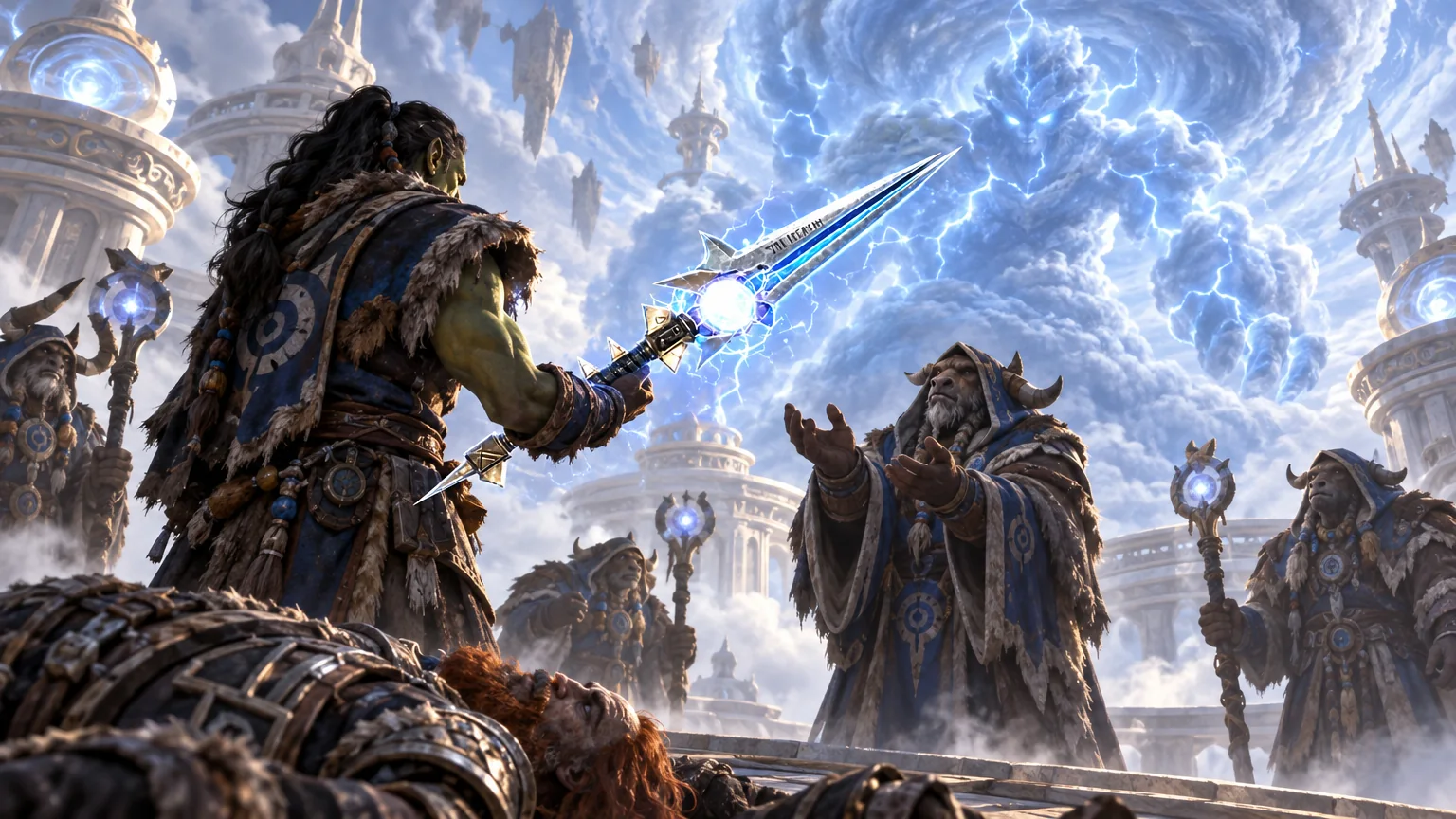
After Vortos fell, the heart's power was joined to Thunderfury. At Nimbus Rise, Consular Celestos began the Ritual of Winds and released the spirit that had endured inside the weapon. Thunderaan returned to physical form—not as the captive prince Ragnaros had broken, but as the new Windlord of Skywall.
The reversal was complete. Mortals had once summoned Thunderaan to kill him and seize his blade. Now mortals restored the blade in order to surrender it, allowing its prisoner to live again. Thunderfury passed back to the being whose essence had made it legendary.
Thunderaan did not forget either chapter. He acknowledged the Earthen Ring's aid and pledged the armies of Skywall against the Burning Legion. But later, when a rogue came before him carrying bindings reminiscent of his ancient prison, the Windlord remembered that mortals had once freed him only to strike him down and steal his power.
VI
A Prison Turned Toward War
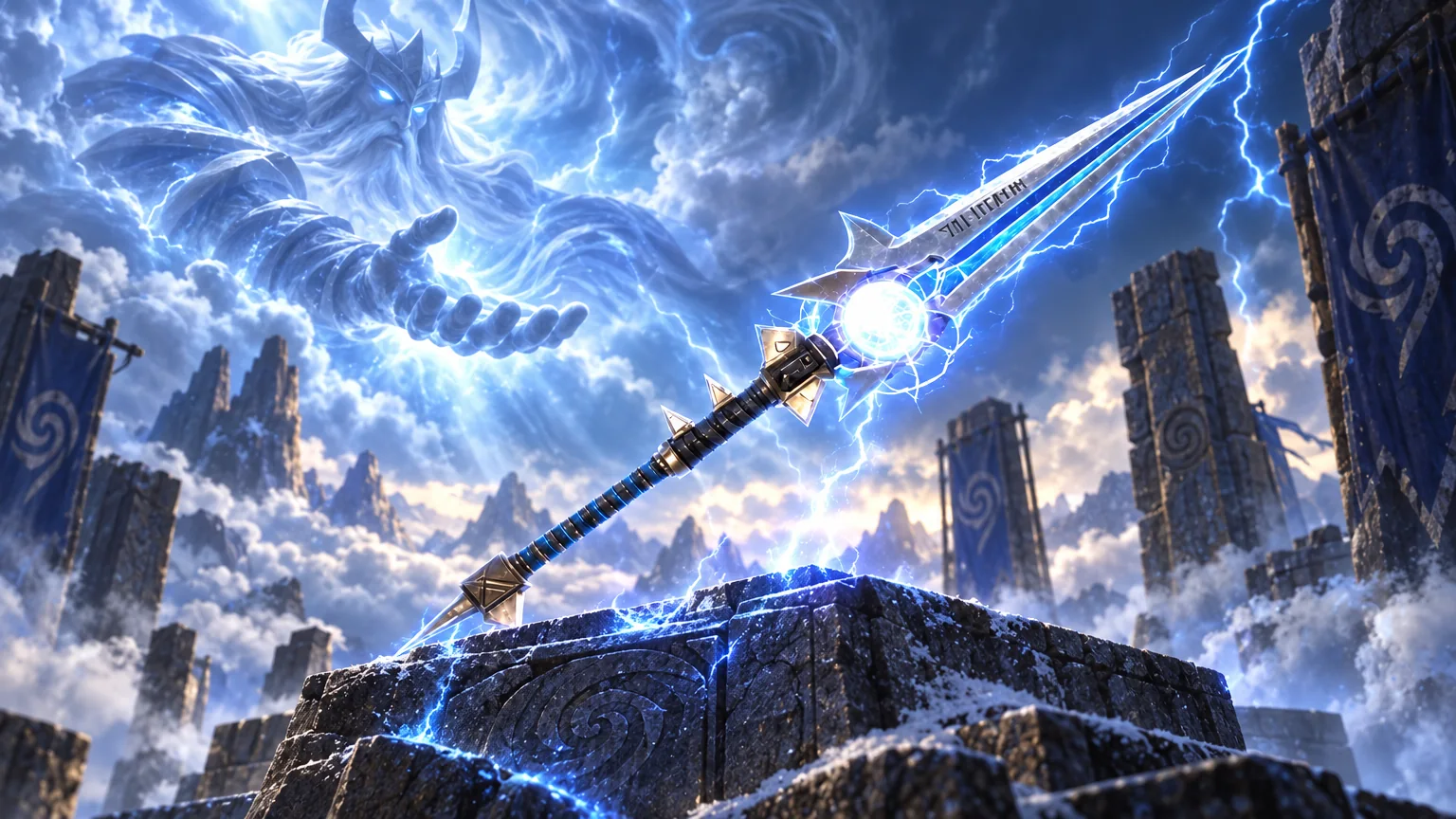
The new bindings were offered as the price of a bargain. Thunderaan accepted them so they could be turned against the servants of the Firelord, and in return he blessed the rogue's Dreadblades with a fragment of his power. The resulting appearance, Thunderfury, Hallowed Blade of the Windlord, deliberately recalled the old weapon without repeating its captivity.
That exchange reveals how far the story had moved. Under Ragnaros, bindings were instruments of enslavement. In mortal hands, the old prison became a means to claim a legendary sword. Under Thunderaan, similar restraints became weapons redirected against fire. The object did not change the past, but its former prisoner could choose what that symbol would mean next.
Thunderfury's complete history is therefore not a straight ascent from loot to legend. It is a cycle of capture, recovery, betrayal, inheritance, and restoration. Ragnaros failed to consume a prince. Demitrian failed to free his master safely. Mortal heroes won a blade but preserved the soul inside it. Wray carried that burden until his death. The Earthen Ring finally broke the cycle by returning the weapon's power to its source.
VII
The Name That Escaped the Story
Thunderfury became famous beyond its lore because players made it famous. In the original game, the weapon was visible proof of a long communal effort. Its wielder carried the labour of Molten Core runs, Blackwing Lair clears, expensive materials, and the final gathering in Silithus. The lightning effect made it unmistakable; the name made it impossible to ignore.
That long ceremonial title—Thunderfury, Blessed Blade of the Windseeker—became a joke repeated in trade channels and Barrens chat. Players would bend unrelated conversations toward the question, “Did someone say Thunderfury?” and link the item yet again. Blizzard later answered the ritual with anniversary toys and the achievement Did Someone Say...?
The joke endured because it was never only a joke. Item links were a way to display wonder in a text window: a whole raid history compressed into orange lettering. Even players who never held the sword learned its silhouette, its crackling core, and the rhythm of its name.
Within the fiction, however, the last word belongs to Thunderaan. Thunderfury ceased to be merely a trophy taken from him. It became the vessel through which he returned, claimed his father's vacant throne, and brought Skywall into the war against the Legion. The blade that once proved a prince had been conquered ultimately became the instrument of the Windlord's resurrection.
Questions from the archive
FAQ
Who originally wielded Thunderfury?
Prince Thunderaan, son of Al'Akir. After Ragnaros's ambush, the portion of Thunderaan's essence that could not be consumed was imprisoned and eventually made into the blade.
Why are there two Bindings of the Windseeker?
Ragnaros broke Thunderaan's elemental prison into two halves and entrusted them to Garr and Baron Geddon. Mortal champions later recovered both pieces in Molten Core.
Who was Wray?
Wray was the dwarf warrior identified in later lore as Thunderfury's mortal wielder. He died fighting Ragemaw in Azsuna, where the damaged sword was recovered during the Legion campaign.
What happened to Thunderfury?
The Earthen Ring restored the damaged blade with the Heart of Skywall. Its power released Thunderaan's spirit, allowing him to return as the new Windlord and wield Thunderfury again.
Watch the Story
Thunderfury: The Sword That Imprisoned a Prince
Watch the complete story of the prison that became Azeroth's most famous legendary blade.