I
A Name Earned in Ash
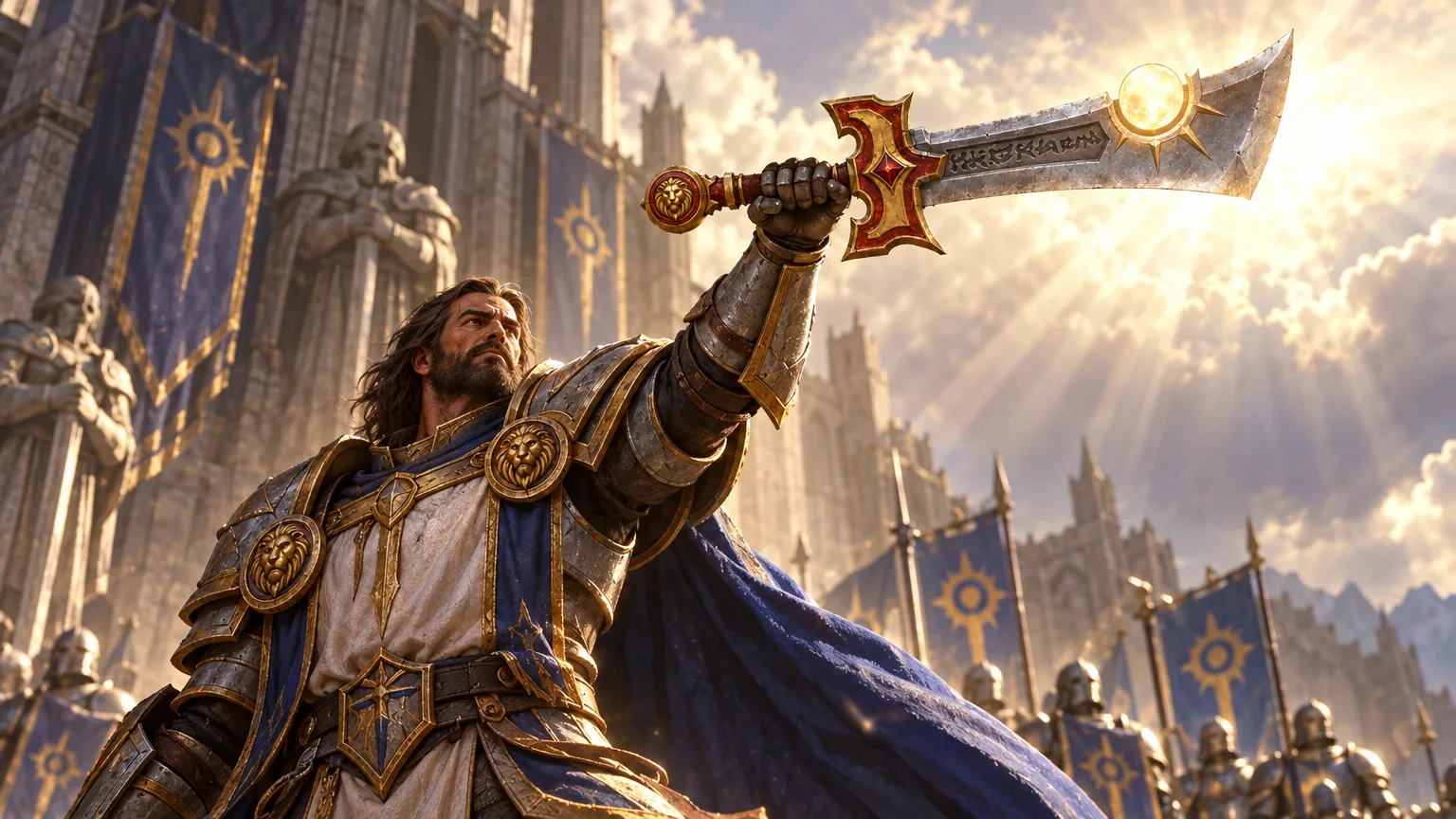
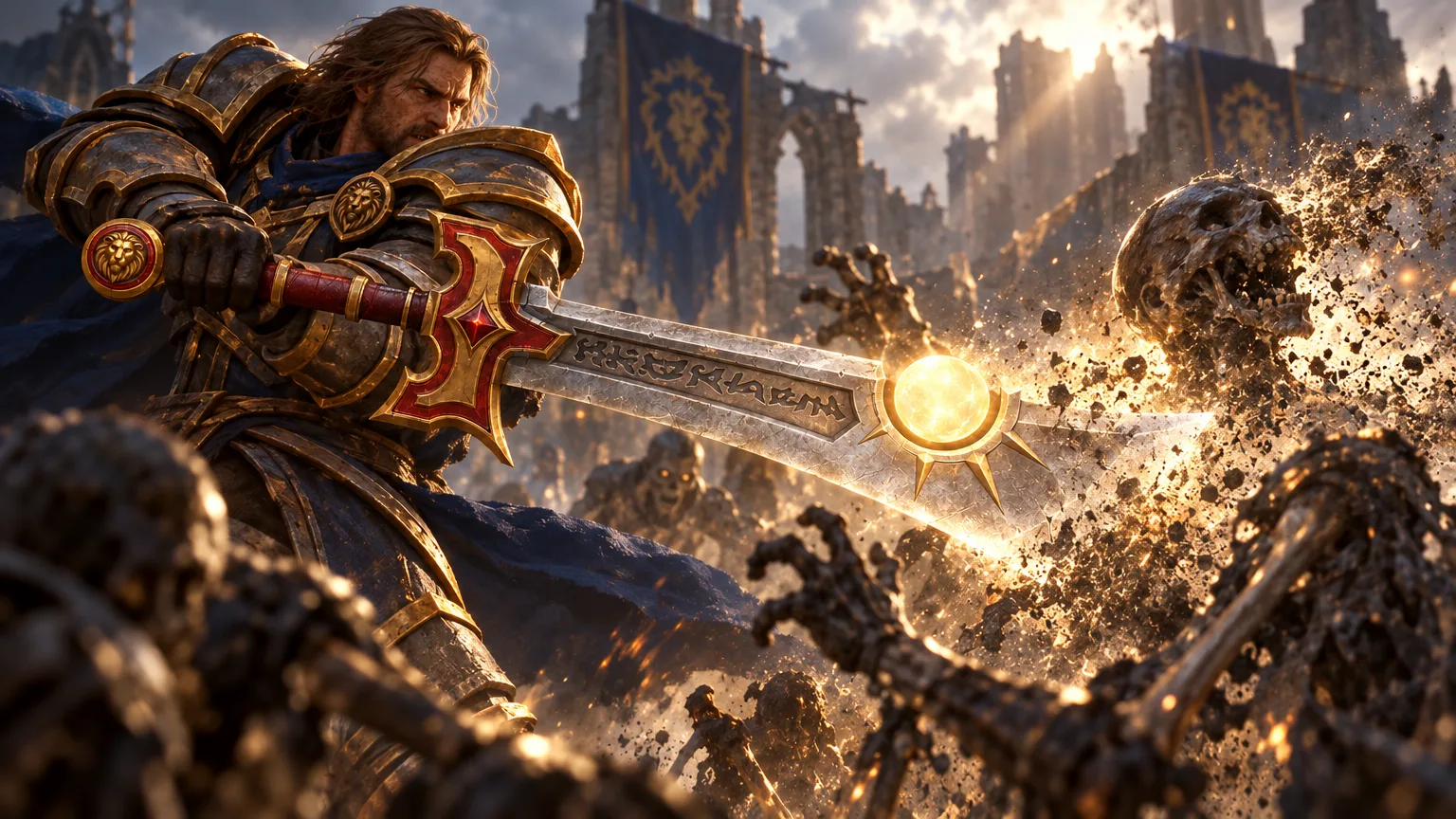
Some legendary weapons are remembered for a single bearer. Others survive because they represent an order, a cause, or an age. The Ashbringer belongs to both traditions. Its reputation begins with what it did to the undead: the blade destroyed them so completely that ash was all it left behind. Its title was therefore not ceremonial. It was the evidence of the sword's purpose.
That purpose made the weapon uniquely suited to an era defined by the Scourge. Against an enemy that denied death and returned the fallen as servants, Ashbringer promised finality. It did not merely stop the undead in battle; its legend suggested that nothing remained for necromancy to reclaim. The name carried the hope that the cycle could be broken.
The sword's meaning, however, would never remain purely martial. Every major transfer of Ashbringer involved a choice: loyalty against betrayal, sacrifice against control, or defiance against despair. Its power explains the name; its passage between wielders explains the legend.
II
Alexandros Mograine, the Original Wielder
The first wielder was Alexandros Mograine, one of the Highlords of the Order of the Silver Hand. His bond with the sword became so complete that Ashbringer was not only the weapon's name, but his title. To speak of the Ashbringer could mean the blade or the paladin who carried it.
That shared identity established the pattern later wielders would inherit. Alexandros did not hold an anonymous tool. He became the visible answer to the threat the sword had been made to oppose. The weapon's ability to reduce undead enemies to ash turned its bearer into a symbol: proof that the Scourge could be confronted by something it could neither corrupt nor easily overcome.
Yet the title also revealed a danger. When a person and a weapon become inseparable in memory, the fall of one threatens the meaning of the other. Those who later received the blade were not beginning a new legend. They were taking responsibility for one already marked by greatness, loss, and the Mograine name.
Alexandros therefore stands at the beginning of more than a line of ownership. He set the standard against which the sword's later bearers would be measured. The original Ashbringer made the blade famous; the blade ensured that his title would outlive him.
III
Purification at Light's Hope Chapel
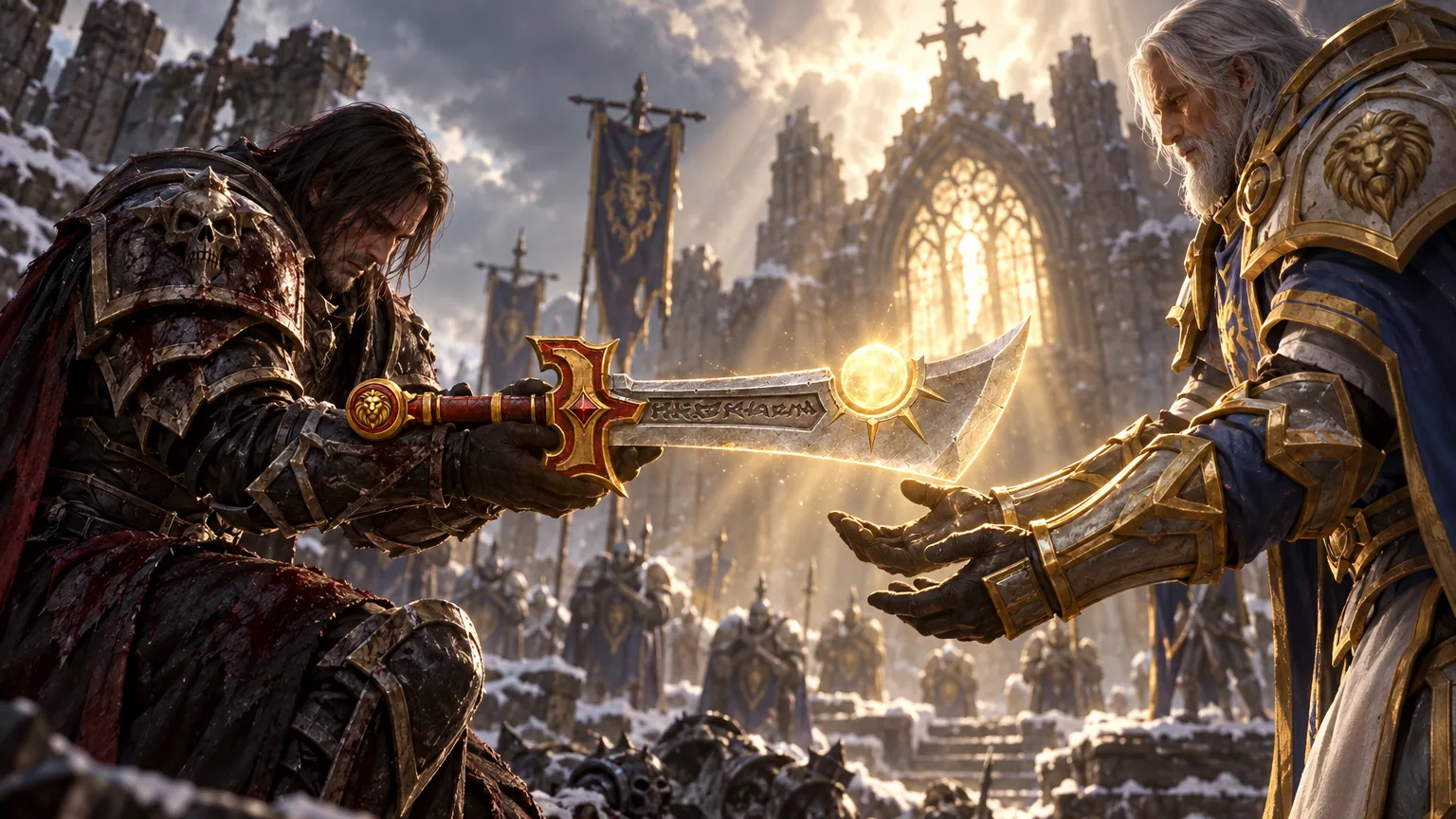
The decisive transfer came during the Second Battle for Light's Hope Chapel. Darion Mograine entered that confrontation in service to the Lich King, but the battle forced a choice between the master who controlled him and the legacy bound to his family. He turned against the Lich King and relinquished the sword to Tirion Fordring.
The location mattered. On Light's Hope's holy ground, the passage of the blade became an act of rejection. Darion's decision broke the direction imposed on him: instead of carrying the weapon deeper into the Lich King's service, he placed it beyond that control and into Tirion's hands.
Ashbringer was purified in that moment. The change restored more than the sword's appearance or power. It recovered the purpose announced by its name. A weapon associated with the destruction of the undead could again be turned openly against the ruler of the Scourge.
For Tirion, the gift was also a burden. He inherited the Mograine legacy and a weapon whose restoration had required Darion to betray the Lich King before him. Alexandros remained the original wielder; Darion made the crucial choice; Tirion became the champion who would carry the purified blade into the war's final campaign.
IV
The Blow Against Frostmourne
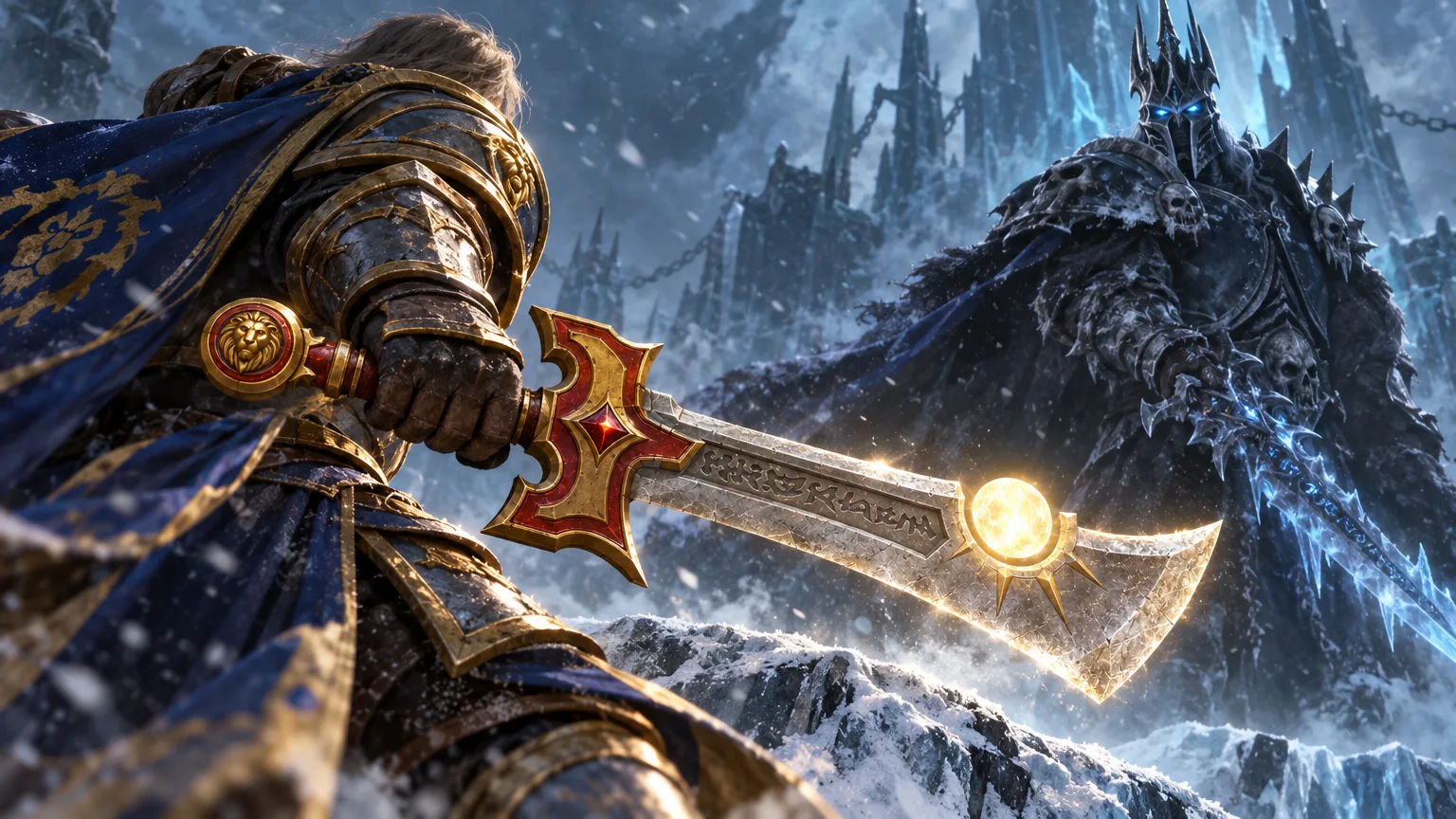
At the Frozen Throne, Tirion Fordring and Ashbringer reached the confrontation toward which the sword's restored purpose had been moving. The Lich King trapped Tirion in ice, removing him from the struggle while the champions who had challenged Arthas were defeated. For a moment, the legendary blade could do nothing because its bearer could not reach the battle.
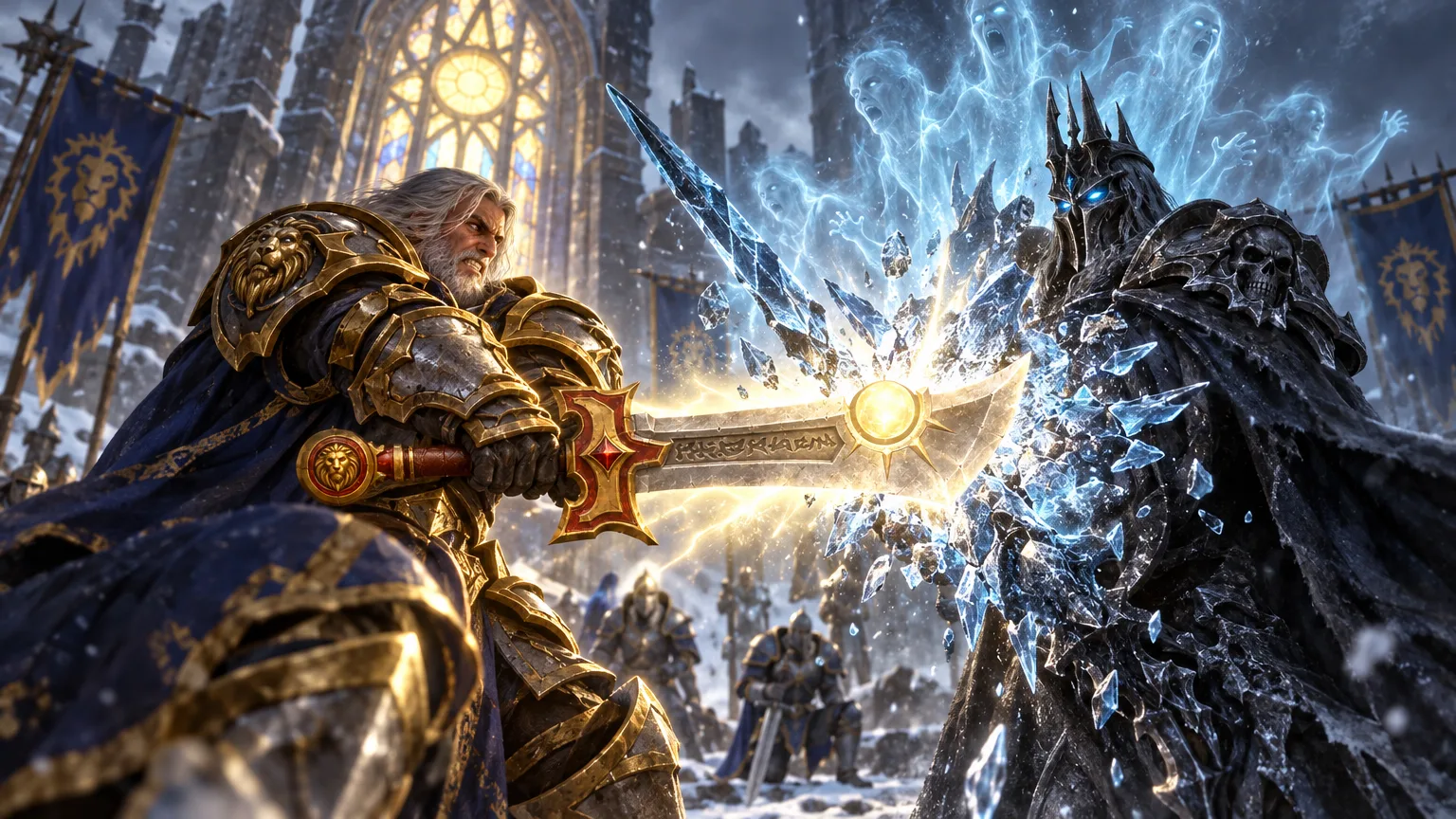
Tirion called upon the Light and broke free. What followed was not a long duel between equal weapons, but one desperate and decisive strike. He brought Ashbringer down upon Frostmourne and shattered the runeblade.
The consequences were immediate. Frostmourne had held the spirits bound within it; breaking the sword released them. Terenas Menethil II was then able to return the fallen champions to life, giving them the chance to finish the battle and kill Arthas. Ashbringer did not deliver the final blow to the Lich King himself, but it made that ending possible by destroying the weapon on which his victory depended.
This moment permanently joined the two swords in Warcraft's memory. Frostmourne represented captivity: a blade that consumed and confined souls. Ashbringer's defining strike broke that prison. One weapon held the dead; the other opened the way for their release.
V
The Sword Passes On
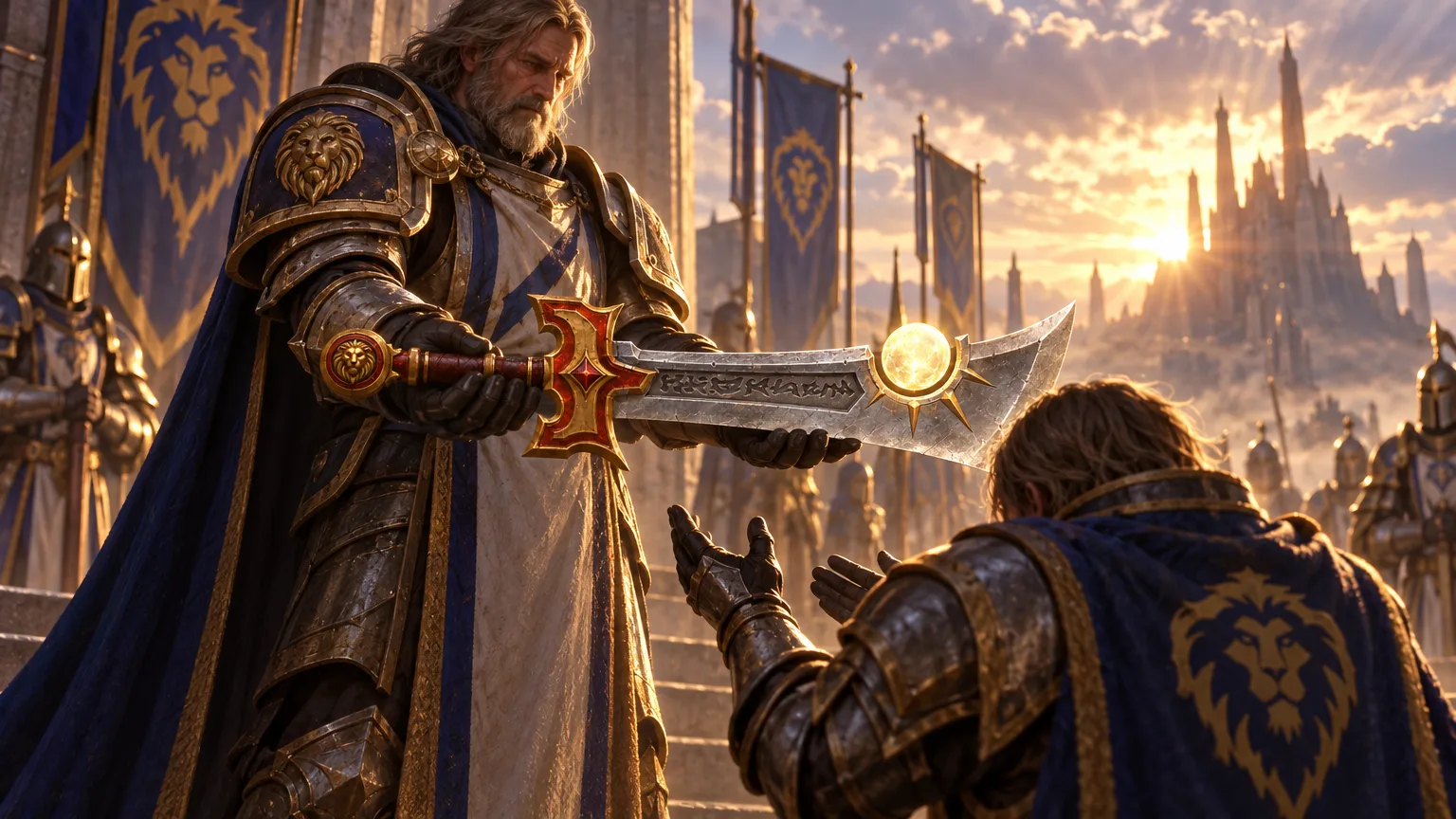
Tirion's victory did not make him the sword's final bearer. During the third invasion of the Burning Legion, he fell, and Ashbringer passed once more. His successor was a Champion of the Light who took up leadership as the new Highlord of the Silver Hand.
That succession changed the relationship between the legend and the player. Ashbringer had occupied a pronounced role during the war against the Lich King, but players could not wield it then. Only with Legion did the sword finally enter their hands as the weapon of the new Highlord.
The new bearer did not replace Alexandros as the original Ashbringer or erase Tirion's stand at Icecrown. The Champion inherited a chain of meaning: Alexandros's title, Darion's defiance, Tirion's purification and victory, and the responsibility of leading the Silver Hand after Tirion's death.
To wield Ashbringer was therefore more than the reward of possessing a famous object. It placed the player inside an established succession and made them accountable for what its earlier bearers had made it represent.
VI
Consequences: A Weapon Bound to Defining Conflicts
Ashbringer's history crosses several of Warcraft's defining conflicts, but it never functions as a passive relic carried from scene to scene. At Light's Hope, its transfer expressed Darion's rebellion against the Lich King. At the Frozen Throne, its strike destroyed Frostmourne and released the spirits trapped within. During the Legion's third invasion, Tirion's death created the need for another successor and another Highlord.
Each event changed what the sword meant. Alexandros made it a symbol of resistance to the undead. Darion proved that a corrupted course could be rejected. Tirion showed that the restored weapon could break the Lich King's greatest instrument. The Champion of the Light then transformed the blade from a legend witnessed at a distance into an inheritance carried forward.
The consequences extend beyond the fate of a single weapon. Frostmourne's destruction freed the souls necessary to reverse the champions' defeat. The Lich King fell because Ashbringer created the opening through which others could act. Its bearer makes a decisive choice, and that choice allows an apparently closed future to open again.
VII
Legacy: Story, Rumor, and Contradiction
Ashbringer's story was revealed gradually across the life of World of Warcraft. Long before players could carry the weapon, its name, its bearers, and its changing condition made it an object of fascination. The distance between seeing the legend and possessing it gave the sword an unusual aura. It felt important before it ever became attainable.
That slow revelation also explains why the weapon accumulated rumor and expectation. Ashbringer was present in the history of the Silver Hand, the battles at Light's Hope, and the fall of the Lich King, yet remained outside the player's inventory. Its absence became part of its prestige.
When Legion finally allowed players to wield Ashbringer, the moment resolved years of distance without closing the story. Player ownership became the newest layer of the legend, not a replacement for Alexandros, Darion, or Tirion.
The enduring image is a weapon passed forward when defeat appears certain. Ashbringer survives betrayal, imprisonment, and the death of its bearers because someone repeatedly chooses to recover its purpose. The sword leaves ash behind, but its own legacy refuses to disappear.
The Passage of Ashbringer
Three bearers. Six turning points.
- Alexandros MograineThe original Ashbringer
- Darion defiesLight's Hope Chapel
- The blade purifiedTirion takes it up
- Frostmourne shatteredThe Frozen Throne
- Tirion fallsThe Legion's return
- A new HighlordPlayer-wielded in Legion
Questions from the archive
FAQ
Why is the sword called Ashbringer?
Ashbringer is named for its ability to slaughter the undead and leave nothing but ash in its wake.
Who originally wielded Ashbringer?
Alexandros Mograine, a Highlord of the Order of the Silver Hand, was the original wielder and was himself known as the Ashbringer.
How was Ashbringer purified?
During the Second Battle for Light's Hope Chapel, Darion Mograine betrayed the Lich King and relinquished the sword to Tirion Fordring. On the chapel's holy ground, the blade was purified.
What did Ashbringer do to Frostmourne?
Tirion Fordring used Ashbringer to shatter Frostmourne at the Frozen Throne. The strike released the spirits trapped within and enabled the fallen champions to return and defeat Arthas.
Watch the Story
Ashbringer: The Sword That Shattered Frostmourne
Watch the story of the blade carried by Alexandros Mograine and Tirion Fordring into the heart of the war against the Lich King.
Continue with the complete history of Frostmourne, Alexandros Mograine before the fall, or Tirion Fordring's story.