I
Fire Beneath Draenor
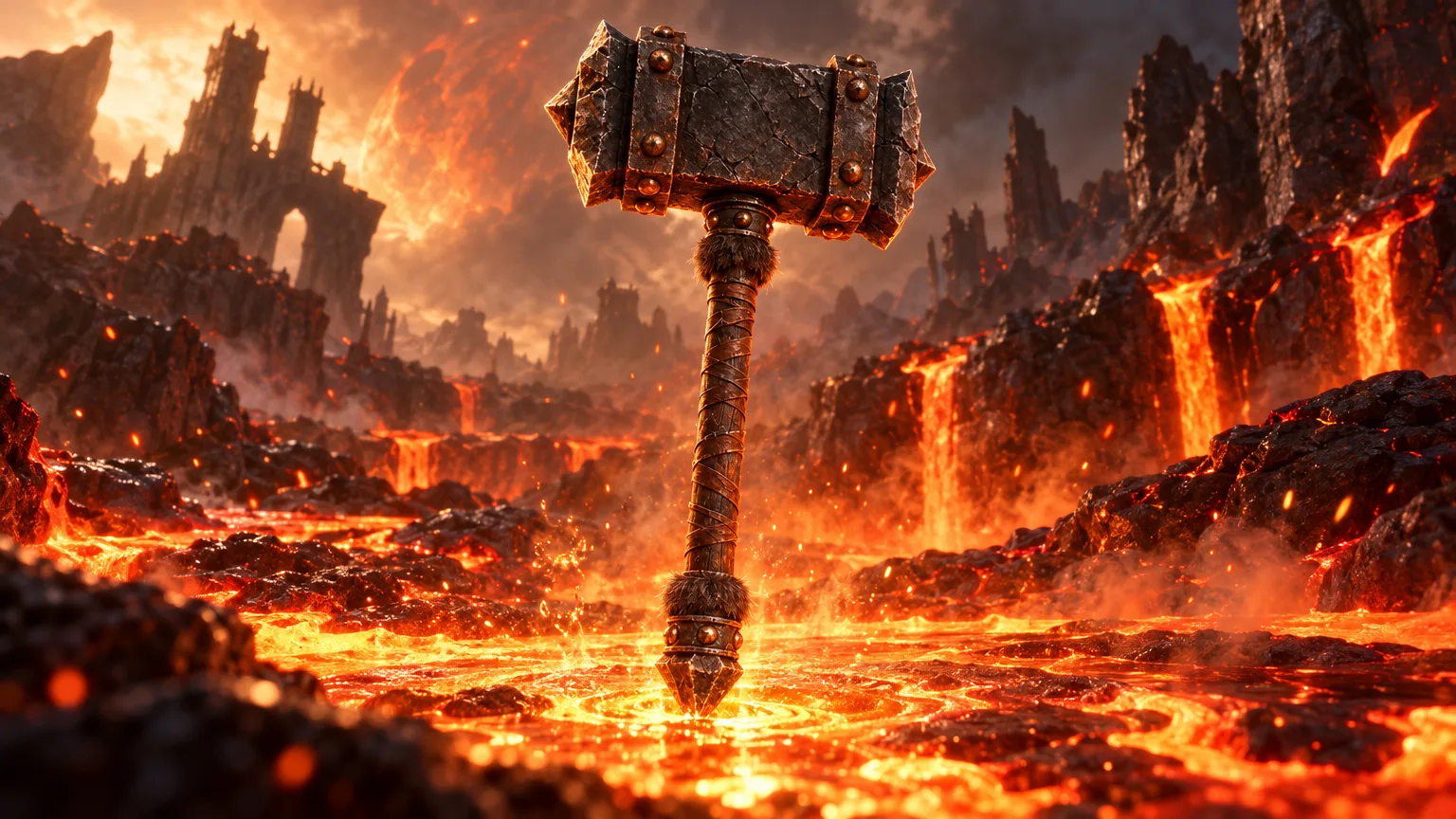
Doomhammer's story begins beneath the surface of Draenor, in a pool of elemental lava. There the orc Gelnar forged the weapon's head. The origin matters because the hammer was associated with elemental force before any famous warrior carried it. Heat, stone, and the living violence of the world shaped its first identity.
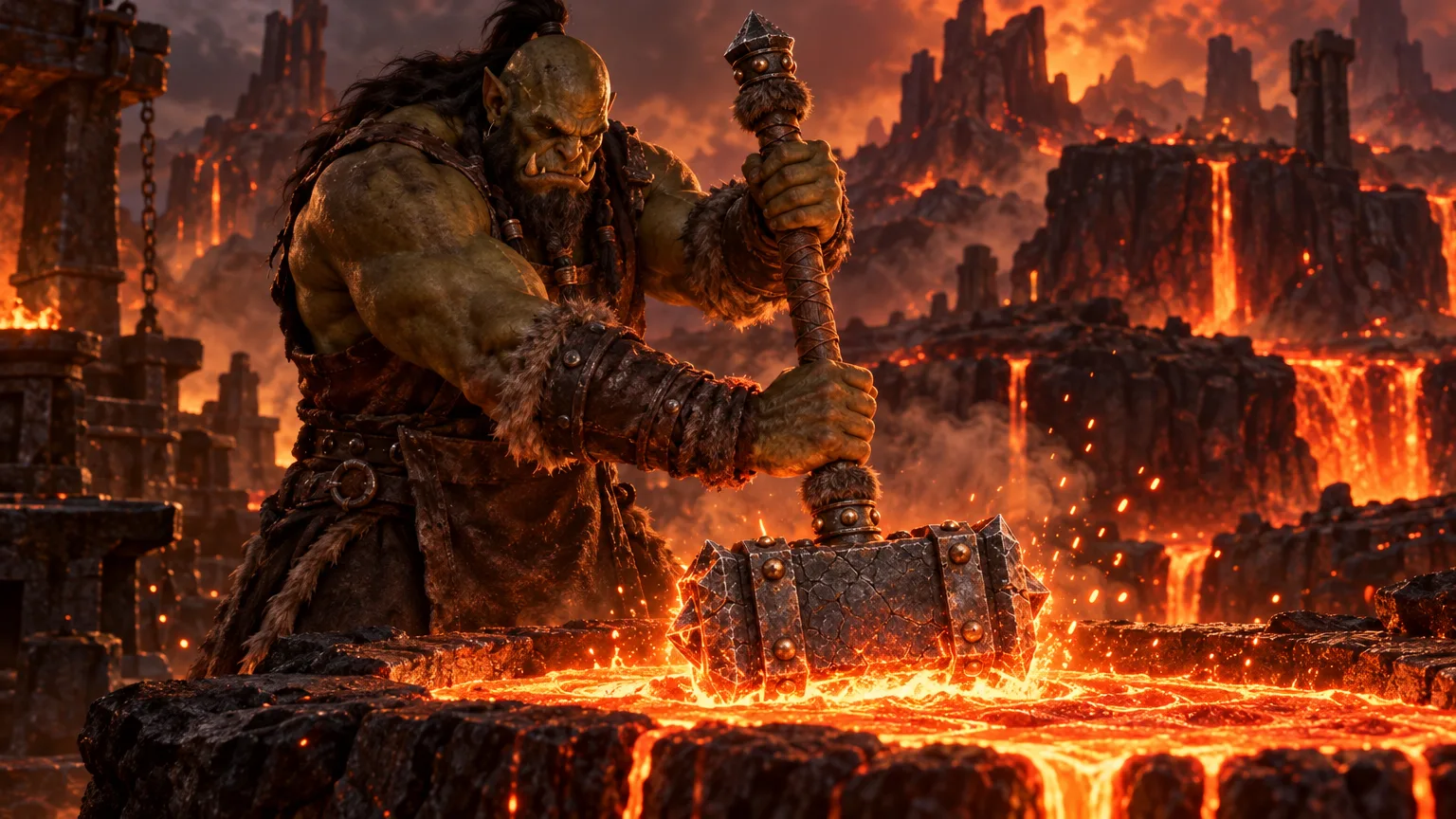
The head alone was not yet the weapon later generations would recognise. Gelnar crafted an oak handle and joined it to the forged stone, completing Doomhammer's enduring form. The marriage of materials gave the hammer its defining contrast: an elemental head born in lava, held and directed through living wood.
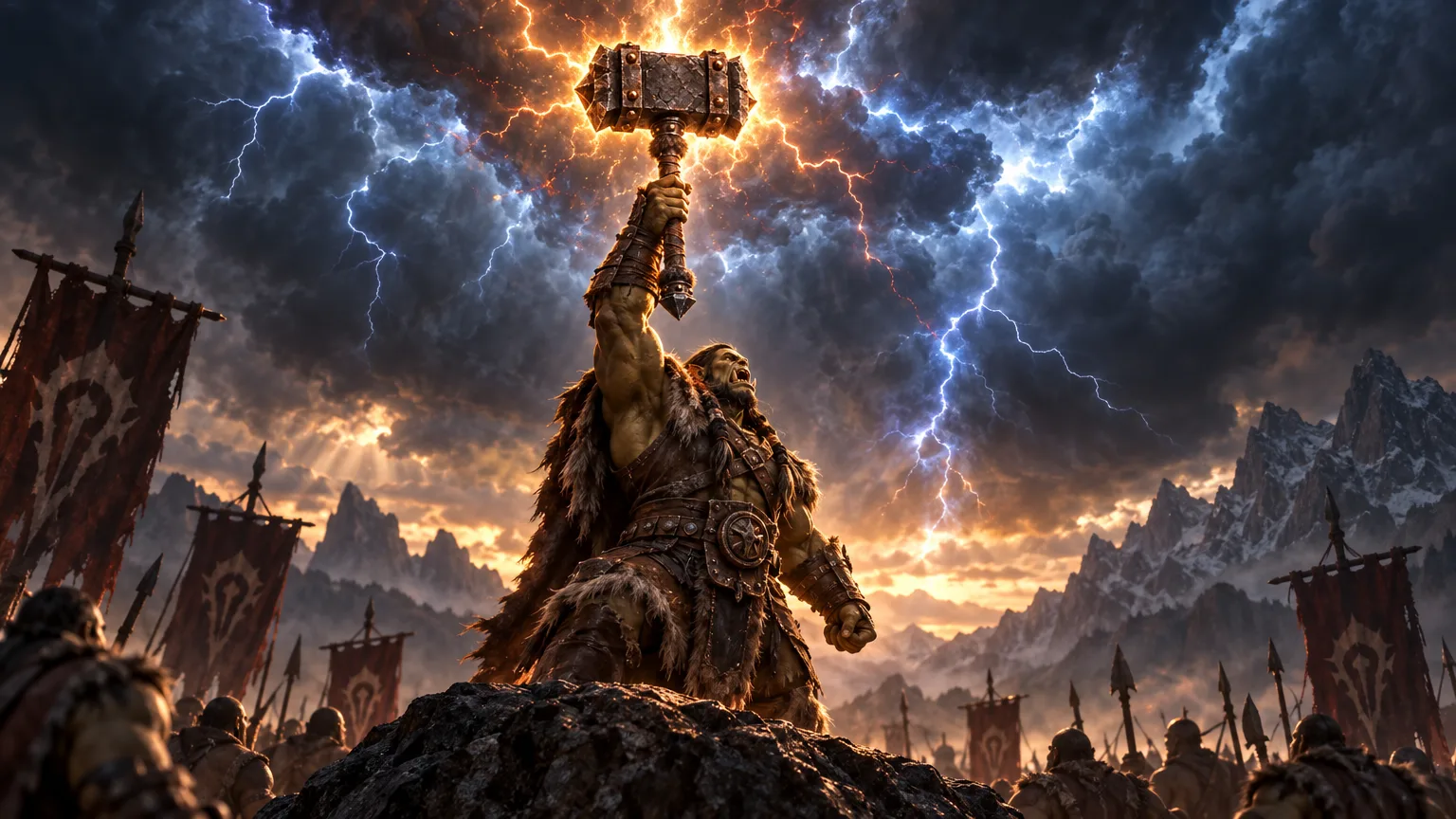
When the work was finished, Gelnar raised Doomhammer to the sky. The weapon answered in fire and lightning. That first remembered gesture was not a strike against an enemy but a declaration. The completed hammer appeared to announce itself through the same forces from which it had been made.
The moment established a pattern that would follow Doomhammer through every later chapter. The weapon never represented brute force alone. Its meaning came from the relationship between power and the person trusted to carry it. Gelnar did more than forge a tool; he began an inheritance.
II
A Name Inherited
The hammer and the name travelled together. For generations they passed from father to son until they reached Telkar Doomhammer, the father of Orgrim. This was not simply the inheritance of a valuable weapon. Each new bearer received a family identity and the burden attached to it.
The meaning of the name was direct: when the owner carried the hammer into battle, it foretold doom for the enemy. Doomhammer therefore described both weapon and consequence. The bearer entered combat with an object whose reputation announced the expected fate of those standing against it.
That promise might have made the hammer only a symbol of victory, but an old prophecy gave its lineage a more difficult future. The last of the Doomhammer line would first bring salvation to the orc people and then bring them doom. Afterward, the weapon would leave the Blackrock clan, pass to someone outside the bloodline, and be used again in the cause of justice.
The prophecy transformed inheritance into a countdown. Every father-to-son transfer preserved the family tradition, but it also moved the weapon closer to the final bearer named by the prediction. Blood determined who received the hammer for generations, yet blood was never meant to determine its entire future.
III
Orgrim and the End of the Line
Orgrim Doomhammer carried the ancestral weapon through the First and Second Wars. He was not merely another bearer in the succession. As the last of the Doomhammer line, his actions stood beneath the prophecy's promise of salvation and doom for the orc people.
War made the hammer famous far beyond the family that had preserved it. In Orgrim's hands, Doomhammer became bound to the fate of the orcs themselves. Its story could no longer remain a private Blackrock inheritance when its bearer was shaping the future of an entire people.
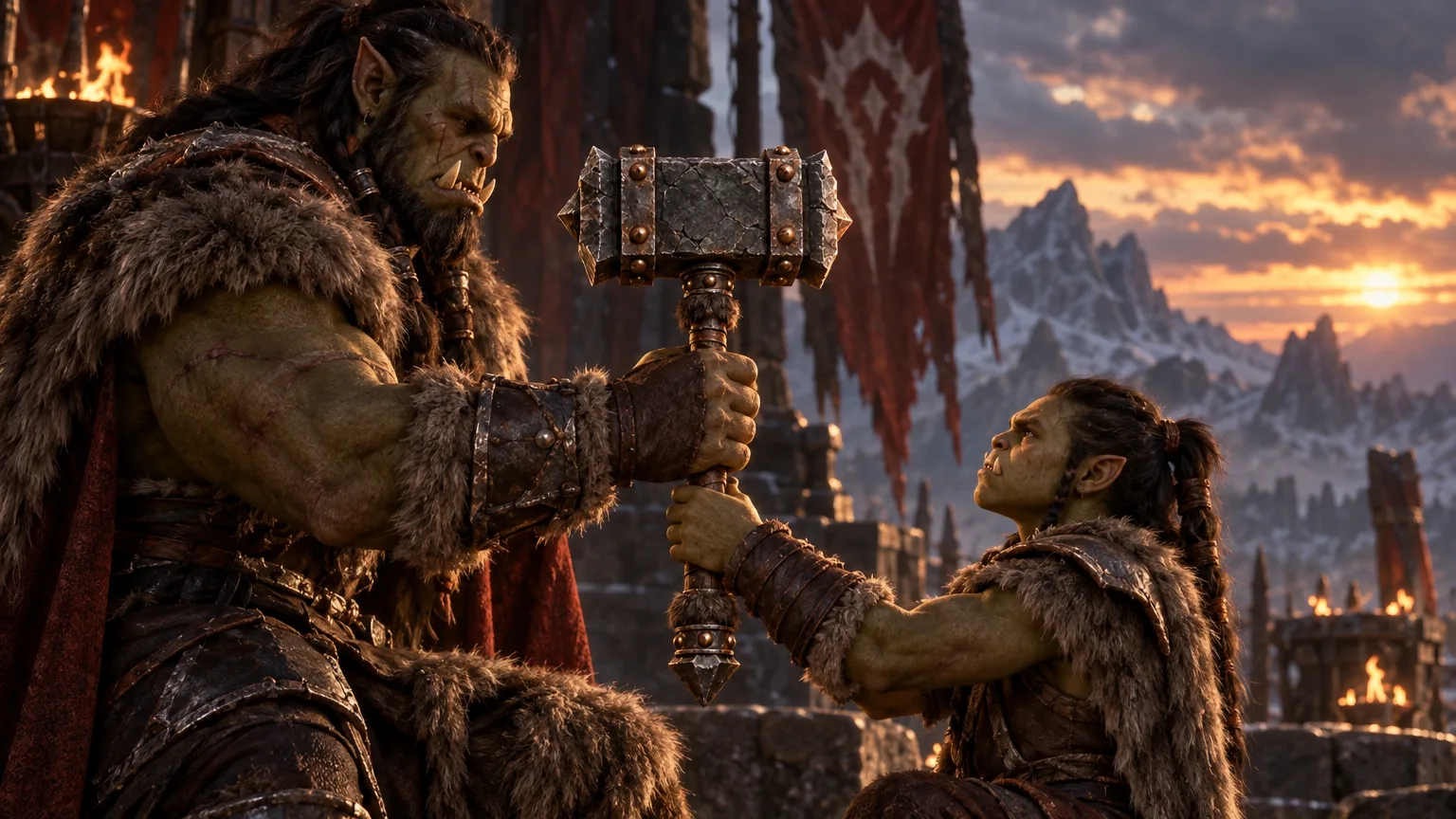
The final transfer came not through a son, but through a choice made at the edge of death. Orgrim was mortally wounded while fighting to free his people from imprisonment. With the Doomhammer bloodline ending, he bestowed the weapon on his protégé, Thrall.
Thrall was neither of Orgrim's clan nor of his blood. That difference was precisely what the prophecy required. The hammer's passage to him broke the father-to-son pattern without breaking the deeper continuity of purpose. Orgrim chose a successor according to trust, example, and the future of the orcs rather than ancestry.
Thrall would redeem the orcish race and complete the prophecy's decisive turn. The old prediction did not end the hammer's history; it liberated that history from bloodline. An inheritance once defined by birth became an inheritance defined by worth.
IV
The Hammer Lost to the Maelstrom
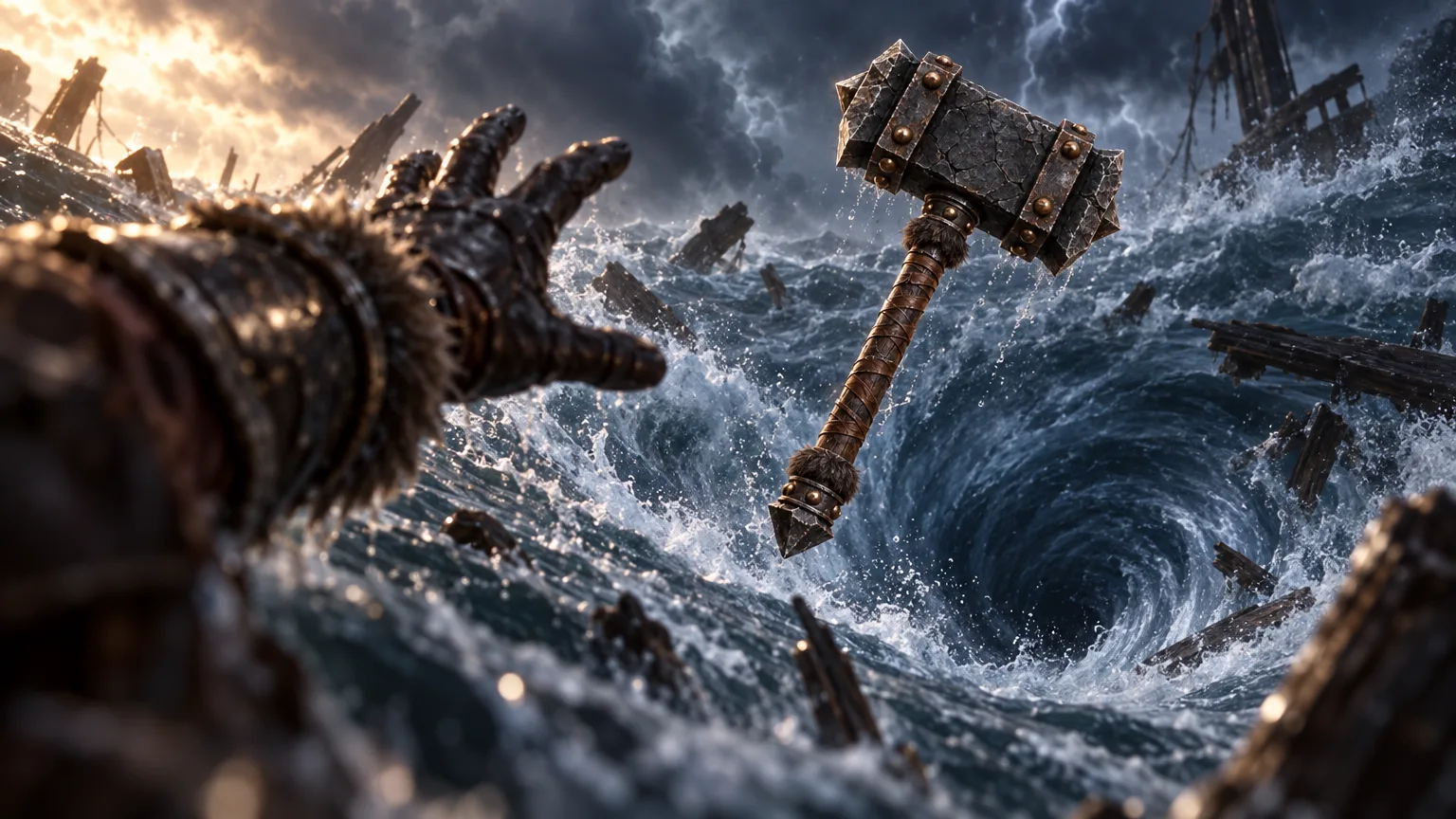
The hammer's passage did not end with Thrall. During a battle at the Heart of Azeroth, Doomhammer fell from his grasp and disappeared into the Maelstrom. It came to rest in Deepholm, separated from the bearer whose identity had become almost as closely linked to it as Orgrim's.
The fall carried unusual weight. Doomhammer had survived an elemental birth, generations of inheritance, two wars, the death of its last hereditary owner, and its passage to an outsider. Losing it to the Maelstrom returned the weapon to the elemental world that had shaped its beginning, but now without a hand directing its power.
Thrall did not recover it alone. Stormcaller Mylra and the new Farseer of the Earthen Ring joined the effort. Their presence widened the meaning of the recovery. This was an Earthen Ring undertaking around an artifact whose history had always joined orcish destiny to elemental force.
After Doomhammer was retrieved, Thrall gave it to the new Farseer and left to think. Orgrim had passed the hammer while mortally wounded, at the end of his line. Thrall relinquished it after a loss and recovery, stepping away so that another shaman could carry it forward.
The Maelstrom chapter confirmed the prophecy's lasting consequence. Once Doomhammer left the Blackrock line, change did not happen only once. Its future remained open to those able to serve the cause attached to it.
V
The Wolf, the Prophecy, and the Remaining Legacy
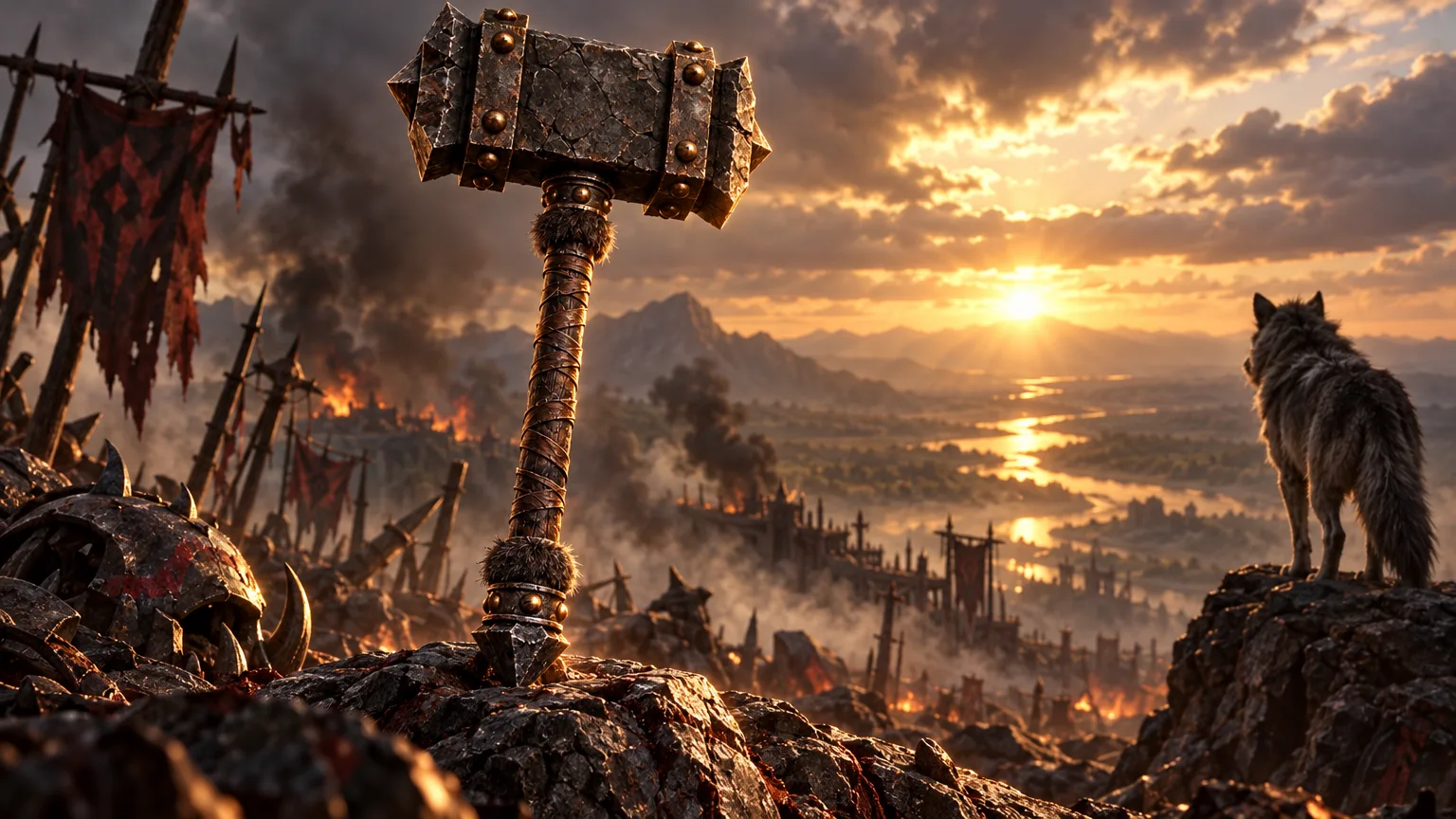
Doomhammer retained the ancient shape created by Gelnar, but it did not pass through Thrall's life completely unchanged. A wolf image was added to the weapon to mark his hereditary ties to the Frostwolf clan. The symbol acknowledged a new lineage without pretending that Thrall belonged to the old one.
That addition captured the hammer's transformed identity. The Doomhammer name and form came from the Blackrock family tradition; the wolf represented the Frostwolf who received it by choice. Both histories could occupy the same artifact.
Through war and peace, Doomhammer stood as an embodiment of the strength the orcish people had possessed in ancient times. It remained a warning to anyone threatening their freedom and honour. The doom promised by its name was no longer merely the triumph of one warrior's enemies; it had become the defence of a people against bondage.
The prophecy had foretold that the weapon would leave its family, that everything would change again, and that Doomhammer would return to the cause of justice. Its fulfilment did not make the hammer morally automatic. The weapon still depended on the bearer. What changed was the principle by which that bearer could be chosen.
Doomhammer's deepest legacy is therefore not ownership but succession. Gelnar made it. A family preserved it. Orgrim chose Thrall at the end of his life. Thrall marked it with the wolf of the Frostwolves, lost and recovered it, then entrusted it to the new Farseer. The old line ended, but the inheritance did not.
The Passage of Doomhammer
One prophecy. Eight turning points.
- Elemental lavaForged by Gelnar
- Oak and stormThe hammer completed
- Father to sonThe Doomhammer line
- Two warsCarried by Orgrim
- Thrall chosenBeyond clan and blood
- The wolf addedFrostwolf inheritance
- Lost to DeepholmThrough the Maelstrom
- The new FarseerAnother chosen bearer
Questions from the archive
FAQ
Why is the weapon called the Doomhammer?
The name reflects the belief that when its owner carries it into battle, the hammer spells doom for the enemy.
What does the Doomhammer prophecy foretell?
It foretells that the last of the Doomhammer line will bring the orcs salvation and then doom. The weapon will then pass to someone outside the Blackrock clan, change again, and return to the cause of justice.
Why did Orgrim give Doomhammer to Thrall?
Orgrim was mortally wounded while fighting to free imprisoned orcs. Thrall was his protégé and the successor outside Orgrim's clan and bloodline whom the prophecy anticipated.
What changed when Thrall carried Doomhammer?
A wolf image was added to mark Thrall's hereditary connection to the Frostwolf clan. Otherwise, the weapon largely retained its ancient form.
Who received Doomhammer after it was recovered from Deepholm?
After Thrall, Stormcaller Mylra, and the Earthen Ring's new Farseer recovered it, Thrall entrusted the hammer to the Farseer.
Watch the Story
Doomhammer: The Prophecy That Passed From Orgrim to Thrall
Watch the journey from Gelnar's elemental forge to Orgrim's final choice, Thrall's inheritance, and the hammer's fall into the Maelstrom.
Continue through orcish history with Thrall's complete story, the legend of Durotan, or the history of Gorehowl.